Menu Close

Soteria Sober Living

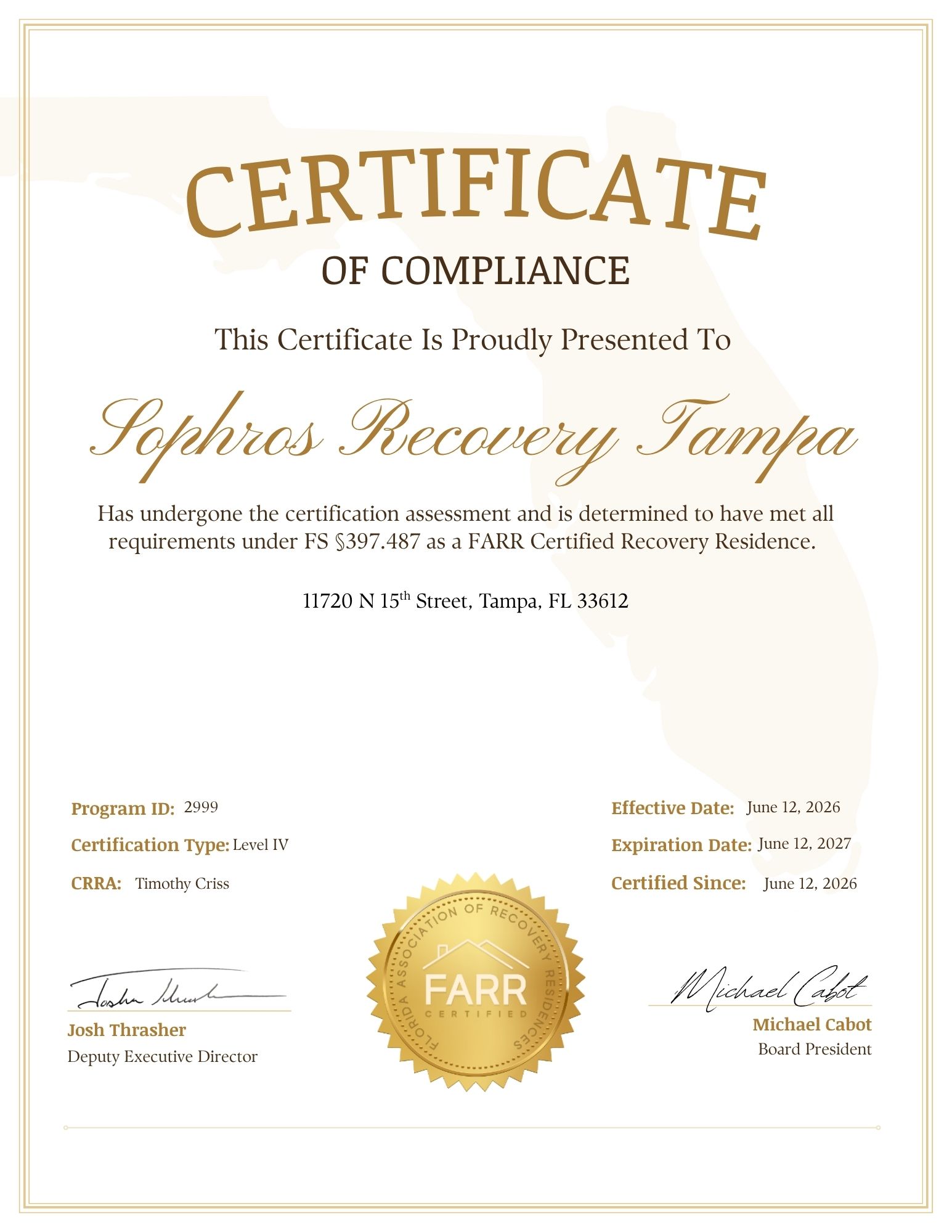
FARR-Certified Sober Living in Tampa, FL

Soteria Sober Living provides FARR-certified, Level IV sober living in Tampa, FL, for adults who need structured recovery housing while participating in outpatient addiction treatment through Sophros Recovery Tampa. Located in the Tampa area, Soteria offers a substance-free living environment, phase-based accountability, MAT acceptance, and a supportive connection to Sophros Recovery’s outpatient continuum of care. 

Sober living can be an important step between treatment and full independence. For many people, returning home immediately after detox, residential treatment, a partial-hospitalization program (PHP), an intensive outpatient program (IOP), or outpatient care can feel overwhelming. Soteria gives residents a structured place to rebuild routines, stay connected to recovery, and practice daily accountability in a real home environment.

Soteria is designed for adults who are ready for a safe, supportive, substance-free recovery residence in Tampa. Housing and clinical services are separate: Soteria provides the home and recovery residence structure, while Sophros Recovery Tampa provides outpatient treatment when clinically appropriate.

Table of Contents

Man speaking to therapist while sitting on couch

Structured sober living connected to Sophros Recovery Tampa

Soteria is a real home built for recovery. It is not a halfway house, and it is not a treatment center. Residents live in a safe, furnished, substance-free recovery residence while participating in structured daily life and, when clinically appropriate, outpatient addiction treatment through Sophros Recovery Tampa.

This connection allows residents to receive housing support and clinical care without confusing the two. Soteria provides recovery housing, daily structure, house expectations, and accountability. Sophros Recovery Tampa provides treatment services such as addiction treatment and care in Tampa, IOP, outpatient programming, therapy, and clinical support when appropriate.

This distinction matters. A resident’s home environment should support recovery, while treatment should be guided by a clinical team. Together, Soteria and Sophros Recovery help adults stay connected to accountability, community, and continued care as they move through early recovery.

What FARR-certified Level IV sober living means

FARR stands for the Florida Association of Recovery Residences. FARR certification helps show that a recovery residence meets standards for safety, ethics, accountability, and quality recovery housing in Florida. FARR supports the stability and integrity of recovery housing across Florida by establishing and enforcing quality standards under Florida law.1 Level IV recovery residences offer a higher level of structure and support than peer-run or lower-support recovery housing. For residents and families, this can provide added confidence that the sober living environment has oversight, defined expectations, and a recovery-focused framework.

FARR certification may help residents, families, and referral partners feel more confident about:

  • Ethical operation
  • Resident safety
  • Accountability
  • Recovery-focused structure
  • Defined policies and expectations
  • Oversight and certification standards
  • A more trustworthy housing environment

Who is Soteria Sober Living for?

Soteria Sober Living is designed for adults ages 18 and older in the Tampa area who are committed to sobriety and ready for structured recovery housing. Soteria offers an inclusive, substance-free living space with accountability, peer support, and connection to outpatient treatment when clinically appropriate. 
A dedicated house is also available for active duty service members, veterans, and their families, reflecting our commitment to those who serve.

Soteria may be a good fit for adults who are:

Medication-assisted treatment and sober living at Soteria

Soteria accepts residents enrolled in medication-assisted treatment (MAT) in accordance with Florida law. MAT status is confidential and does not affect housing eligibility.  FARR has published best-practice guidance on integrating medication-assisted recovery and medication-assisted treatment into certified recovery housing environments, with an emphasis on safety, stability, trust, and compliance.2

When Soteria may not be the right fit

Soteria may not be appropriate for every person. Soteria does not accept individuals who:

  • Are registered sex offenders
  • Have been convicted of violent crimes against children
  • Require an assisted living level of care (older adults or disabled persons)
  • Need detoxification before admission

The admissions team can help determine whether Soteria, Sophros Recovery Tampa outpatient treatment, or another level of care is the most appropriate next step.

A phase-based path toward independence

Soteria uses a phase-based structure to help residents build stability over time. Phase advancement is based on consistency, engagement, and meeting expectations, not just the number of days someone has lived in the home.

The goal is not to punish residents or make recovery feel rigid. The goal is to help people practice independence gradually while staying connected to accountability, structure, and community.

A phase-based path toward independence

Soteria uses a phase-based structure to help residents build stability over time. Phase advancement is based on consistency, engagement, and meeting expectations, not just the number of days someone has lived in the home.

The goal is not to punish residents or make recovery feel rigid. The goal is to help people practice independence gradually while staying connected to accountability, structure, and community.

A phase-based model may help residents build:

  • Daily routines
  • Consistent recovery engagement
  • Accountability
  • Life skills
  • Healthy boundaries
  • Work, school, or volunteer structure
  • Community connection
  • Greater independence over time

Each resident’s path may look different. Some people need more structure early on, while others may be ready to take on more responsibility as they show consistency. Soteria provides a clear path forward, while Sophros Recovery Tampa’s substance abuse treatment services can support clinical recovery needs when appropriate. 

Stabilization
(First 48 Hours)

New residents begin with an orientation period focused on settling in, establishing routine, and connecting with the recovery community inside the residence.

Phase 1 — Build Your Foundation

Minimum 30 days. Residents establish structure: recovery meetings, curfew, house participation, and a consistent weekly schedule of work, school, or treatment.

Phase 2 —
Grow Your Independence

Residents demonstrate accountability in recovery, work, and daily life while maintaining house expectations and earning increased independence.

Phase 3 — Prepare for What’s Next

Residents in Phase 3 are working toward independent living, serving as positive role models in the community and building the stability to sustain long-term recovery. 

Cost, availability, and admissions

Soteria Sober Living offers program fees set at fair market rates for the Tampa area. Rent deferral options based on need may be available to residents who qualify. Our team works with residents to reduce financial barriers where possible. Our admissions team can share current rates, discuss what is included, and help you understand available options.

The admissions process may include:

  • A phone call or inquiry form
  • Basic screening for fit and eligibility
  • Review of current treatment or referral needs
  • Discussion of current availability
  • Review of program cost and what is included
  • Confirmation of house expectations
  • Move-in planning if approved
  • Coordination with Sophros Recovery Tampa when outpatient treatment is appropriate

Daily structure, house expectations, and accountability

Soteria Sober Living provides structured sober living in Tampa for adults who benefit from routine, accountability, and a substance-free home environment. Residents follow a phase-based structure, which means expectations and privileges may expand as they demonstrate progress and stability.

The goal is to help residents build steady daily habits while staying connected to recovery, treatment, work, school, volunteering, or other productive routines.

What residents can expect

Residents may be expected to participate in:

  • A structured weekly schedule
  • Recovery support meetings
  • House participation
  • Chores and shared household responsibilities
  • Curfew and phase expectations
  • Regular check-ins
  • Drug and alcohol screening
  • Ongoing engagement with the Sophros Recovery Tampa and Soteria community
  • Work, school, volunteering, treatment, or another productive routine
  • Respectful communication with housemates and staff

Curfew and phase structure

Soteria uses a phase system to support consistency and accountability. Curfew expectations are based on each resident’s phase and may include different times for weekdays and weekends.

As residents move through the program and remain in good standing, they may become eligible for additional privileges, such as later curfews, overnight passes, or vehicle access. Overnight passes may require approval, drug and alcohol screening, continued rent payments, and continued program fee payments.

Drug and alcohol screening

All residents are breathalyzed nightly and may be subject to random drug screening. Testing may occur at least every two weeks and up to twice weekly.

Testing is included in program fees. Refusal to test is treated as a positive result. Residents who dispute a result may request confirmatory lab testing at their own expense.

Medication storage

Residents enrolled in medication-assisted treatment are welcome at Soteria. MAT medications must be stored in a locked staff office and accessed under staff supervision. MAT status is confidential and does not affect housing eligibility.

Recovery meetings

Recovery meeting participation is part of the weekly structure. Meeting expectations may vary by phase:

  • Phase 1: 5 meetings per week
  • Phase 2: 4 meetings per week
  • Phase 3: 3 meetings per week

Accepted meeting formats may include AA, NA, SMART Recovery, Recovery Dharma, All Recovery, and other staff-approved fellowships. Attendance is verified with a signed meeting tracker.

Work, school, and structure

Residents are expected to be employed, enrolled in school, actively volunteering, attending treatment, or participating in another approved productive routine within 30 days of move-in.

Residents are expected to maintain a structured weekly schedule of approximately 40 hours. Residents without employment may be expected to be off the property during weekday daytime hours. Overnight employment and work in bars, casinos, nightclubs, or similar environments are not permitted.

Visitors, phones, and parking

Personal phones are permitted. Visitors may be allowed on the property for approved events.

Overnight guests are not permitted. Opposite-sex visitors are not permitted inside the residence without prior staff authorization.

Vehicle parking is a Phase 3 privilege. Residents with vehicles must maintain current registration, insurance, and a valid license on file. Soteria is not responsible for parking citations or vehicle damage. 

What’s included at Soteria Sober Living

Soteria gives residents a furnished, supportive recovery housing environment in Tampa. The goal is to provide a stable home base where adults can focus on recovery, structure, and rebuilding daily life.

Residents receive:

  • Furnished unit
  • Bed linens
  • Electricity
  • Water
  • Internet service
  • Basic cable television
  • Laundry room access
  • Laundry supplies
  • Firepit
  • Clubhouse
  • Common amenities
  • Regular property maintenance

Residents are responsible for:

  • Personal hygiene items
  • Food
  • Cleaning supplies
  • Personal clothing
  • Personal medications
  • Transportation costs, unless otherwise confirmed
  • Personal spending money

Sober living near USF, Temple Terrace, and North Tampa

Soteria Sober Living serves adults looking for structured sober living in Tampa, North Tampa, Temple Terrace, and greater Hillsborough County. Admissions are coordinated through Sophros Recovery Tampa.

Soteria may serve adults from:

  • Tampa
  • North Tampa
  • Temple Terrace
  • USF area
  • University Business Center area
  • Busch Gardens Tampa Bay area
  • Carrollwood
  • Wesley Chapel
  • Brandon
  • Lutz
  • New Tampa
  • Seminole Heights
  • Westchase
  • Riverview
  • St. Petersburg
  • Clearwater
  • Greater Hillsborough County
  • Nearby communities throughout the Tampa Bay area

Soteria is designed for adults who want safe, structured recovery housing while staying connected to outpatient support, community, and daily accountability.

Sophros Recovery Tampa
10500 University Business Center Drive,
Suite 215
Tampa, FL 33612
813.686.6306

Get structured sober living in Tampa today

If you or someone you love is looking for structured sober living in Tampa, Soteria Sober Living can help you take the next step. Soteria offers safe, substance-free recovery housing for adults who are ready for accountability, community, and a more stable daily routine.

Connected to Sophros Recovery Tampa, Soteria gives residents a supportive place to live while participating in outpatient care when clinically appropriate. Whether you are applying for yourself, helping a loved one, or referring a patient, the admissions team can walk you through availability, eligibility, cost, and next steps. 

FAQs about sober living in Tampa

Length of stay may vary based on each resident’s recovery needs, treatment engagement, phase progress, goals, and readiness for independent living. The admissions team can explain typical stay expectations and how phase advancement works.

Yes, Soteria may be appropriate for adults stepping down from detox, residential treatment, inpatient rehab, PHP, IOP, or outpatient care. The team can help determine whether sober living is the right next step based on the person’s stability, recovery goals, and current clinical needs.

Insurance coverage varies. Sober living and clinical treatment are separate services, and coverage may depend on the person’s plan, benefits, medical necessity, and level of care. Contact the admissions team to discuss housing costs, treatment coverage, and current options.

Soteria’s response may depend on the situation, safety concerns, house policies, and the resident’s clinical needs. The goal is to maintain a safe, recovery-focused environment while helping residents access the appropriate level of support. Confirm current relapse and discharge policies with the admissions team.

Yes, family members may be involved when appropriate and with proper consent. Families can ask questions about eligibility, cost, availability, house structure, and how sober living connects with outpatient treatment.

Residents should bring personal clothing, hygiene items, approved medications, recovery materials, and other personal essentials. Soteria provides furnished housing and certain household amenities, but residents are responsible for personal items, food, and cleaning supplies.

Yes, adults from outside Tampa or Florida may contact Soteria to ask about availability, eligibility, and move-in requirements. The admissions team can help determine whether Soteria is an appropriate fit.

Soteria may be appropriate for some adults with co-occurring mental health conditions if they are stable enough for sober living and able to meet house expectations. Sophros Recovery Tampa may provide co-occurring support through outpatient treatment when clinically appropriate.
Yes, residents may be expected to maintain a structured weekly schedule, which may include treatment, work, school, volunteering, job searching, or other approved productive activities.

Sober living may help reduce relapse risk by providing a substance-free home, accountability, structure, recovery community, and support while residents practice daily life skills. It can be especially helpful after higher levels of care when someone is transitioning back into work, school, family life, or independent living.